



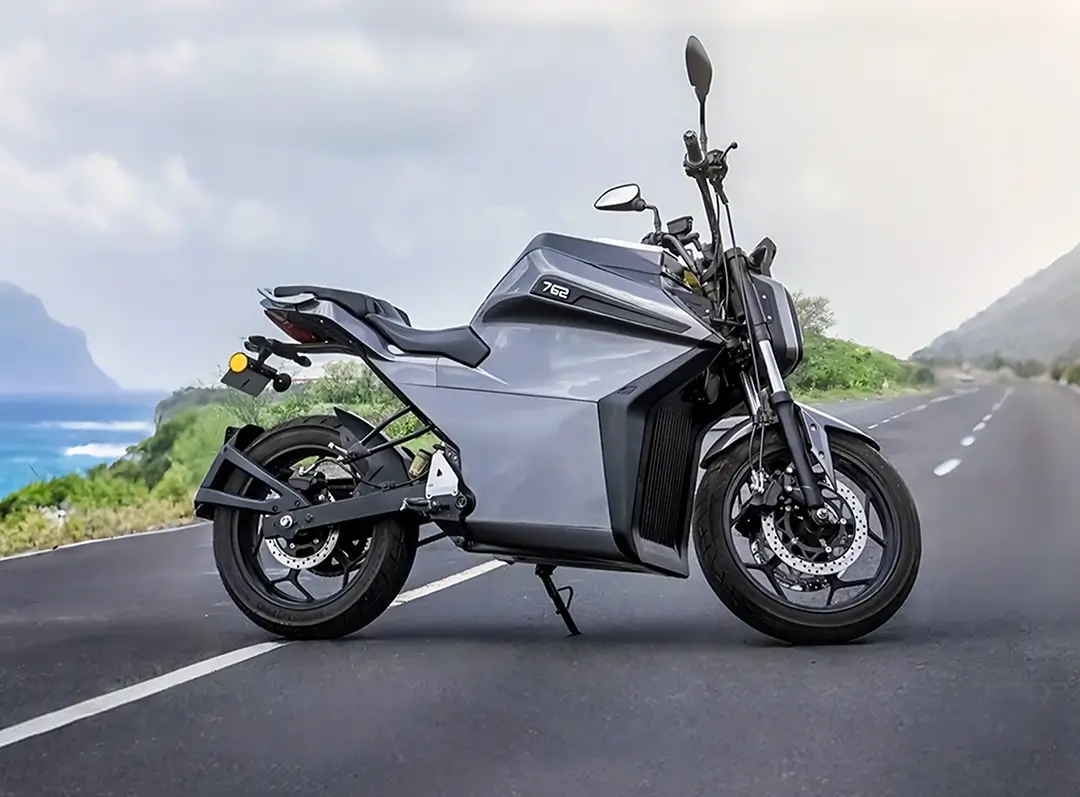
Every km on a Svitch displaces roughly 60 g of CO₂ compared to an equivalent petrol two-wheeler — at scale, that adds up fast.
The headline
14,800 tonnes of CO₂ avoided by Svitch riders in 2025 — equivalent to planting 245,000 trees or taking 3,200 cars off the road for a year.
The numbers
Across 52,000 active Svitch riders in 2025, we collectively avoided an estimated 14,800 tonnes of CO₂. That number comes from averaging the daily distance ridden (28 km), the grid-mix CO₂ intensity in India (708 g/kWh), and the petrol baseline of a 110cc commuter (60 g/km).
But what about the grid?
A common counter is that India's grid is still coal-heavy, so EVs just move the emissions upstream. The math says otherwise: even with current grid intensity, every Svitch ride is roughly 65% cleaner than the petrol equivalent — and that gap widens every year as renewables come online.
Manufacturing emissions
A Svitch's lifetime emissions also include the carbon embedded in manufacturing the bike and battery. We use that data honestly — and even after factoring it in, the break-even point against a petrol bike comes at roughly 8,500 km. After that, every km is net-positive for the planet.
Where we go next
Three big initiatives are live or in pilot — 100% solar at the Ahmedabad plant, the Attero battery-recycling partnership, and a closed-loop water program. Together they aim to cut our per-unit manufacturing footprint by 40% by 2027.

Comments (0)
No comments yet — be the first to share your thoughts.